
Enstructure’s Latest Move Signals Where Port Logistics Is Heading

Enstructure’s agreement to acquire LOGISTEC’s marine terminal division comes as shippers and logistics operators seek reliable networks that connect terminals to rail, trucking, storage, and inland distribution with fewer handoff failures. This transaction highlights a freight market where operators with extensive networks can influence cargo flows, service reliability, and investment priorities across the U.S. and Canada.
What happened
On June 15, Enstructure announced an agreement to acquire LOGISTEC’s marine terminal division, stating the deal would create a leading North American terminal network while maintaining LOGISTEC’s Canadian presence and heritage. This follows recent expansions, including a long-term agreement supporting Sims’ Houston operations, leadership appointments in auto logistics and key regions, and an earlier move into finished vehicle logistics in Jacksonville.
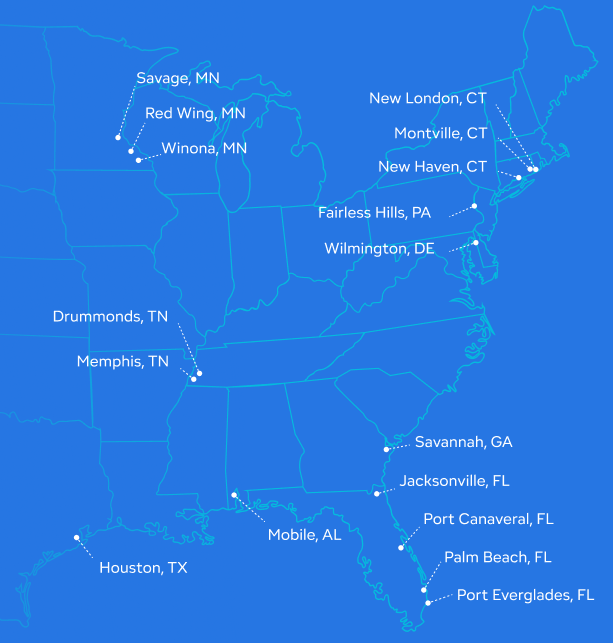
Enstructure’s network spans the East Coast, Gulf Coast, and Inland River system, operating integrated terminals, warehouses, cold storage, rail assets, and trucking. Its strategy is to add infrastructure at key intermodal points, then enhance operating control and commercial coordination.
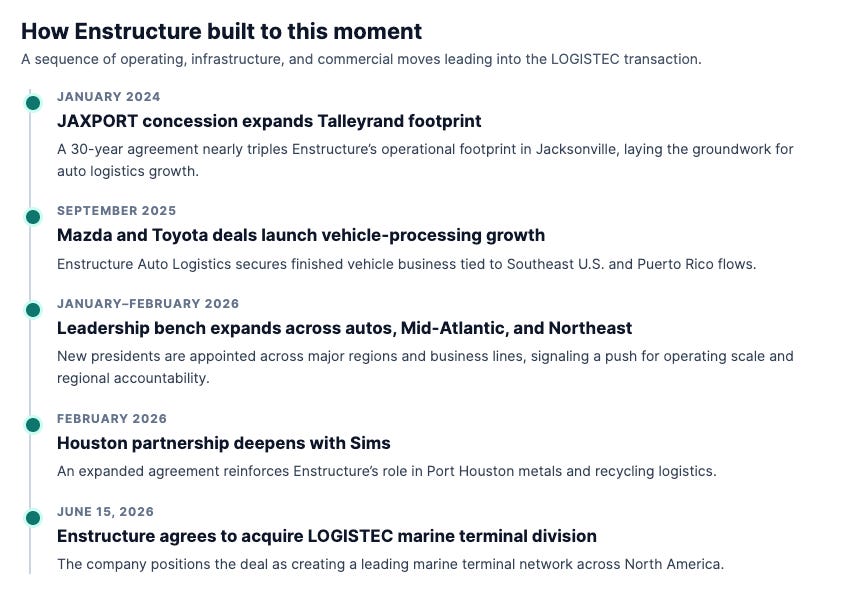
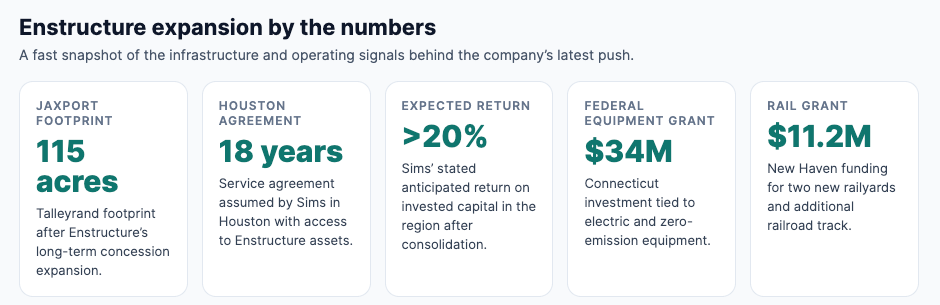
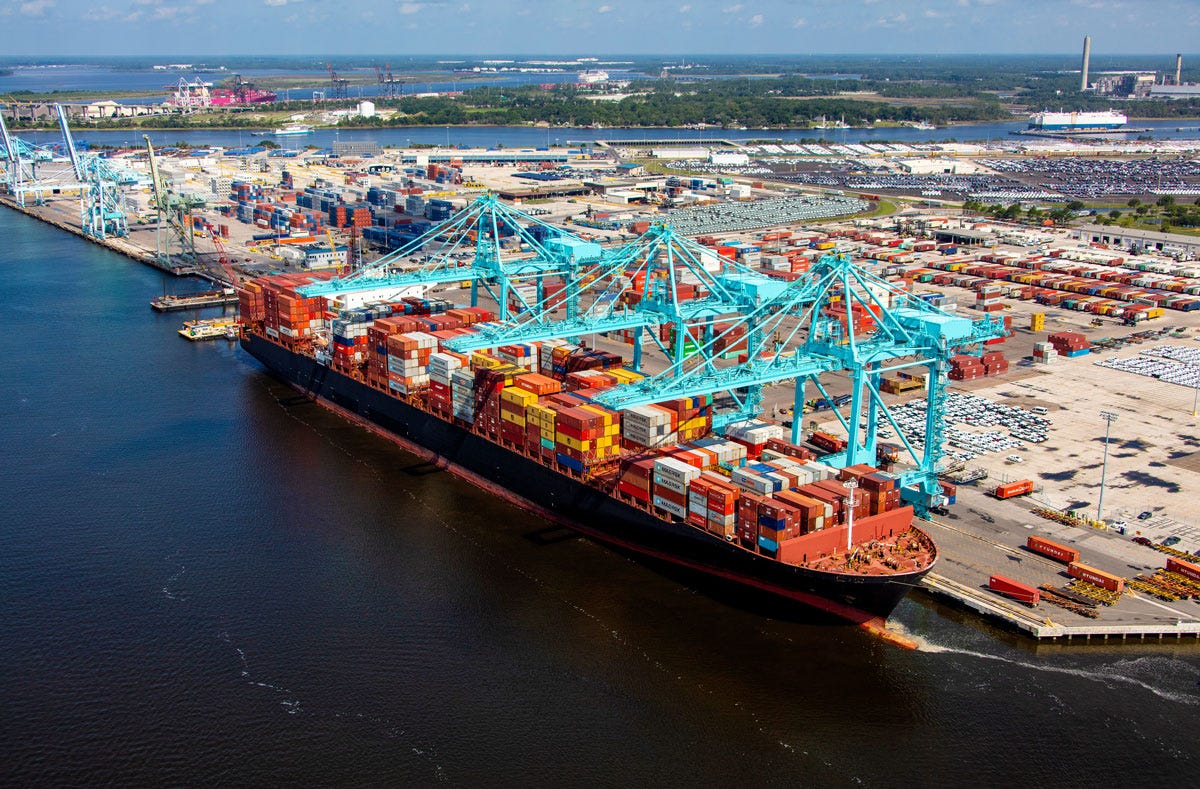
This approach was evident in Jacksonville, where Enstructure Auto Logistics secured agreements with Mazda North America and Toyota Logistics Services to handle finished vehicles through JAXPORT’s Talleyrand terminal. According to Transport Topics, Mazda imports from Japan and Mexico and Toyota shipments to Puerto Rico use a 115-acre terminal developed under Enstructure’s 30-year JAXPORT concession.
A similar strategy is seen in Houston, where Enstructure’s expanded agreement with Sims provides the metals recycler access to deep-water docks and adjacent facilities in Galena Park on the Houston Ship Channel. Sims CEO Stephen Mikkelsen stated the consolidation should improve processes, reduce costs, and deliver a return on invested capital of over 20% in the region. This directly links terminal access to capital efficiency, a key consideration for investors.
Infrastructure Strategy
For freight operators, larger terminal networks can reduce routing and handoff risks but may also concentrate control among fewer parties. Carriers, brokers, drayage providers, and forwarders should recognize that terminal relationships will become increasingly important for securing consistent turn times, storage access, vehicle processing capacity, and berth-dependent cargo windows.
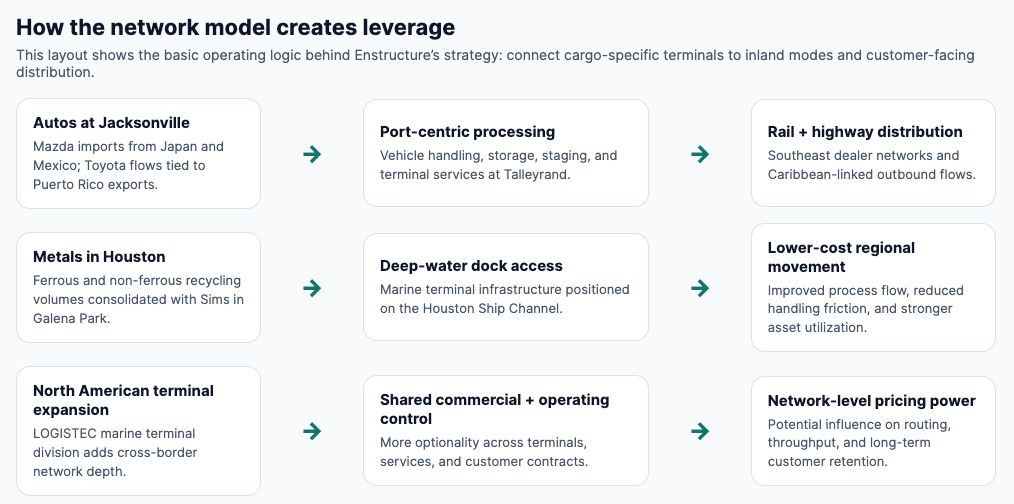
Infrastructure is central to this strategy. Enstructure has focused on port-centric assets that link waterfront operations to rail, trucking, warehousing, cold storage, and specialized cargo handling. This has been supported by federally backed upgrades in Connecticut, including $34 million for electric and zero-emission equipment and an $11.2 million grant for railyard and rail track expansion in New Haven. The LOGISTEC transaction extends this approach across North America: control more strategic nodes to make the network more valuable than individual terminals.
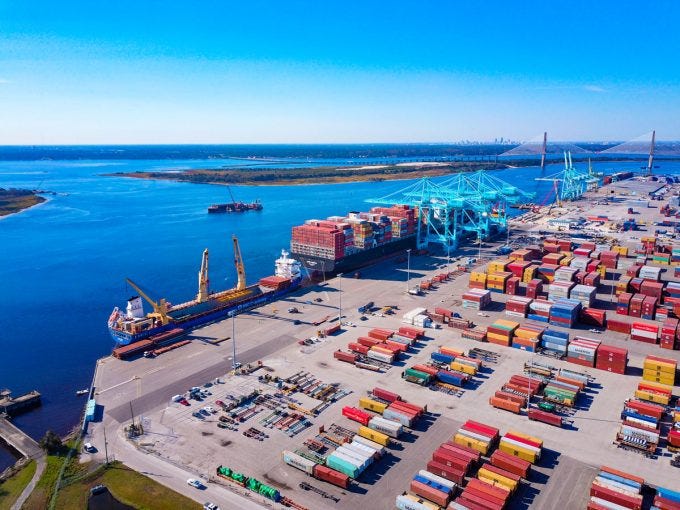
The emerging-markets angle is not just geographic in the conventional sense. It is also about where future freight density will be built: finished vehicles, recycling and metals flows, temperature-controlled cargo, and trade corridors that reward flexibility among port, inland, and regional distribution nodes. Jacksonville’s auto growth and Houston’s recycling throughput show Enstructure leaning into cargo segments tied to evolving sourcing, manufacturing, and circular-economy patterns rather than relying on a single commodity story.
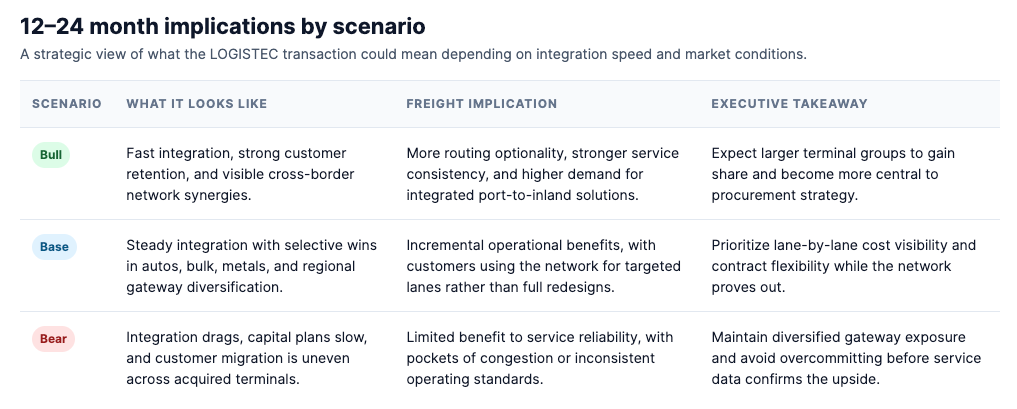
At the global supply chain level, the acquisition matters because North American trade is becoming more network-sensitive. Importers and exporters are placing greater value on resilience, optionality, and visibility across multiple gateways, especially as trade policy, vessel rotations, and regional sourcing strategies continue to shift. A larger Enstructure could give customers greater ability to rebalance cargo across terminals and regions, but it could also intensify competition among ports and terminal operators for anchor customers and infrastructure investment.
Key Insights
Enstructure is moving beyond assembling terminals to building a cross-border operating system for marine logistics.
The LOGISTEC deal reinforces the idea that port scale now depends on proximity to rail, trucking, warehousing, and specialized handling, rather than on waterfront acreage alone.
Jacksonville and Houston illustrate how Enstructure targets cargo categories with strong customer relationships and high infrastructure needs, specifically finished vehicles and recycled metals.
The company’s rapid leadership appointments indicate a focus on regional accountability as its asset base grows, often leading to stronger commercial execution and faster integration.
For investors, the key question is whether Enstructure can translate network breadth into improved margins, utilization, and customer retention throughout the business cycle.
For operators, as terminal networks consolidate, enhanced freight intelligence becomes more valuable because routing, dwell, storage, and modal-transfer costs are harder to assess without clear network-level insights.
What to Watch
First, monitor how the LOGISTEC transaction affects Enstructure’s exposure to Canadian cargo flows and whether the combined network influences routing decisions for shippers seeking to diversify across North American gateways. Second, look for follow-on capital plans, as acquisitions of this scale often drive faster standardization in systems, labor planning, rail coordination, and customer visibility tools.
Third, observe whether Enstructure leverages its expanded footprint to strengthen sector-specific operations in autos, bulk, breakbulk, metals, and temperature-sensitive cargo. For decision-makers evaluating the next phase of port competition, the key question is not which terminal has space, but which network can move freight most consistently, with minimal friction and clear cost visibility across modes. This is where market intelligence and cost visibility platforms such as FreightFA become essential for planning, procurement, and network design.