
Why Class 1 Experience is the Rocket Fuel Short Lines Need
In the last year, multiple top-tier Class I operators have taken leadership roles inside short-line and regional ecosystems.

A quiet talent shift is happening in rail—and it’s a growth signal
Not loud. Not dramatic. Just… telling.
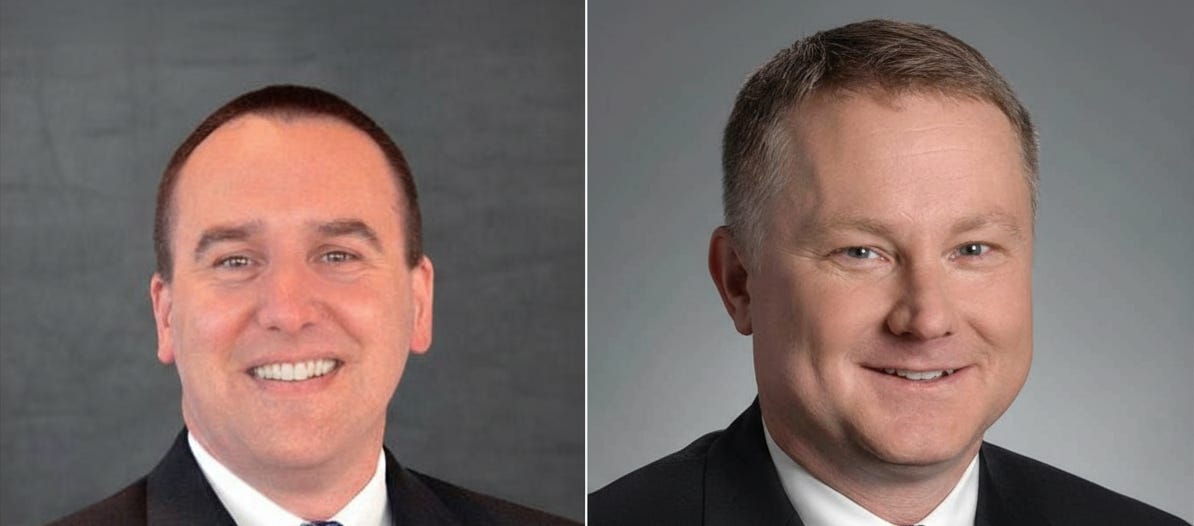
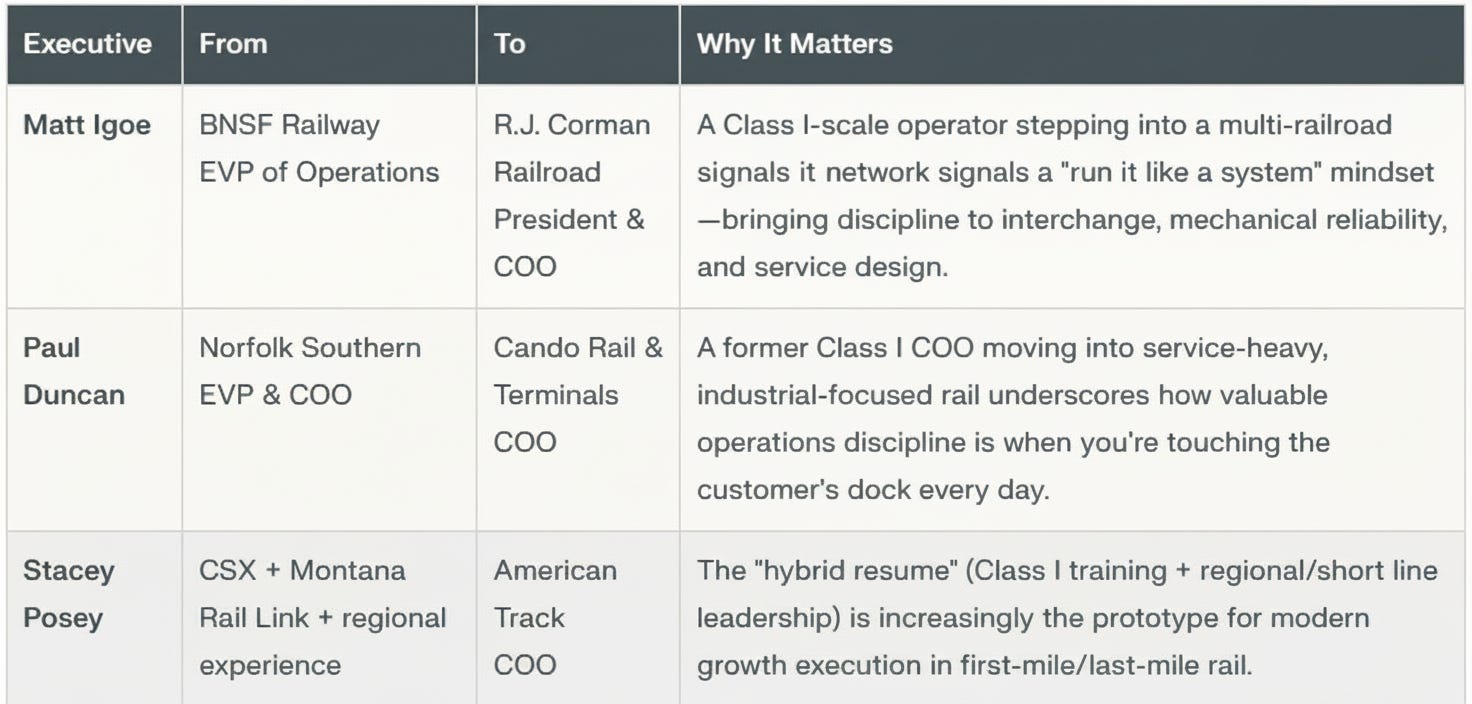
In the last 18 months, at least three former Class I executives have taken COO or President-level roles at short line and regional rail operators—most recently, a BNSF EVP, Matt Igoe, joining R.J. Corman. The signal is not “Class I bad.” The signal is: short lines are getting bigger, more sophisticated, and more central to growth.
If a proposed mega-merger does move forward, first-mile/last-mile rail won’t be a talking point. It becomes the game.
Short lines aren’t just recruiting railroaders—they’re recruiting operating systems
Class I railroads are built to run scale: huge networks, huge capital programs, huge compliance burden, huge complexity. That environment produces leaders trained to think in systems like:
Network velocity and service design
Safety systems and standard operating procedures
Mechanical reliability at scale
Engineering prioritization (what gets fixed first—and why)
Customer commitments that must hold across thousands of route miles
Short lines—especially multi-property platforms—are increasingly trying to achieve the same goal, with a different mission: to be the best first-mile/last-mile partner on earth.
So when a short-line network brings in Class I operating leadership, it’s not a culture war. It’s a capability add.
Short lines are where rail growth actually gets created
Short lines sit at the point of industrial truth:
Industrial parks
Transload sites
Ag origination
Construction aggregates
Manufacturing plants that still need rail—but need it to be easy
Short lines touch the shipper’s dock. That’s not romantic. It’s an operational reality.
And industry commentary increasingly positions short lines as strategic infrastructure—interchange partners and growth enablers—not a side quest.
This is why the “Class I experience → short line growth” link is so clean:
Class I leaders bring repeatable operating discipline
Short lines bring shipper intimacy and flexibility
Together, the combined product is reliable first-mile/last-mile—the exact place rail can win more freight
Capital is showing up—and capital changes the ambition level
Short lines aren’t only growing because of grit. They’re growing because money is flowing toward rail-adjacent infrastructure plays.
Example: Watco announced $600M+ of investment from Duration Capital Partners—capital of that magnitude typically comes with an expectation of scaling capabilities, expanding footprint, and professionalizing execution.
Regional Rail has also continued expanding via acquisition, including the Minnesota Commercial Railway deal.
Whether it’s acquisitions, internal buildouts, or tech-enabled service improvement, capital tends to pull leadership profiles upward. It’s much easier to justify a “former Class I EVP Ops” hire when the strategy is “build a platform,” not “run a single property.”
What “Class I experience” unlocks inside a short line (non-hyped, very real)
1) Interchange becomes the customer experience
For many shippers, interchange performance feels like the service. A short line can execute locally and still lose trust if the interchange goes sideways.
Class I leaders are typically steeped in network handoffs and service design—skills that map directly to making interchange more predictable, more accountable, and easier to troubleshoot.
2) Scaling operations without losing short line responsiveness
Short lines win with responsiveness. But as they grow (more properties, more customers, more complexity), responsiveness breaks unless the operating model matures.
Class I-trained leaders can add leverage through standard work, safety cadence, reliability programs, engineering prioritization, and KPI discipline—without turning the culture into something it’s not.
3) Credibility with bigger shippers (and bigger site decisions)
Fair or not, “short line” still gets translated as “small” in some boardrooms.
A leadership bench that includes former Class I EVPs/COOs can reduce perceived risk for large shippers—because the short line can truthfully say: operating leadership understands scale constraints and how to run through disruption.
If UP–NS happens, first-mile/last-mile becomes the conversation
Union Pacific and Norfolk Southern have announced a proposed combination (subject to regulatory approvals and a long timeline).
If something like that does go through, one second-order effect could be portfolio rationalization—lower-density segments becoming “non-core,” with opportunities opening for regionals and short lines to operate or acquire them.
That scenario accelerates two trends:
First-mile/last-mile becomes the value battleground (long-haul trunk gets bigger and more consolidated)
Short lines become even more central to carload growth, because they are the on-ramp/off-ramp for industrial freight
In that environment, it makes sense to see short line platforms loading up on leaders who know how to manage complexity, design service, and operate safely under regulatory scrutiny—not as a reaction to Class I railroads, but as a response to the future shape of the network.
This is a skills-transfer story
This is a market signal: short lines are becoming a growth engine and are hiring leadership that can help them operate like one.
Class I railroads will keep doing what they do best—run the backbone. Short lines will keep doing what they do best—serve shippers close to the ground. The opportunity is in the overlap: disciplined operations + customer-near execution.
FreightFA takeaway (for shippers and operators): short lines that combine shipper-level agility with Class I-grade operating discipline will be the ones that turn rail’s “first-mile/last-mile” talking point into measurable growth.
More FreightFA short line coverage: